
There are plenty of ways to roll a joint.
Some are quick. Some require actual skill. Some involve tiny plastic devices that look like they were designed by someone who has never encountered cannabis before.
Josie and Esper teamed up with P37 to test four popular joint-rolling methods using Cherrylicious flower: a pre-rolled cone, a traditional rolling machine, a larger box-style rolling machine and the classic hand-rolled joint.
Some methods worked beautifully.
Others wasted time, flower and emotional energy.
Here is what happened.
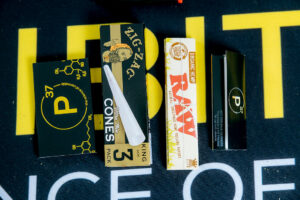
What You Need to Roll a Joint
Before you begin, collect the essentials:
- Cannabis flower
- A grinder
- Rolling papers
- Filter tips
- Pre-rolled cones
- A packing stick, pencil or similar tool
- A clean rolling tray
- A lighter
- A little patience
- A willingness to accept that your first joint may look haunted
Esper prefers using a grinder because evenly ground flower is easier to pack and roll. Both Josie and Esper also use filter tips because nobody wants loose flower flying into their mouth halfway through a hit.
Filters also give the joint structure and make the whole operation feel slightly more professional.
Method One: The Pre-Rolled Cone
Let us begin with the method most likely to preserve your dignity.
A pre-rolled cone already has the paper and filter formed for you. All you have to do is fill it, pack it and twist the end.

How to Fill a Pre-Rolled Cone
- Grind the flower evenly.
- Pour or scoop a small amount into the cone.
- Gently pack it down.
- Add another layer.
- Repeat until the cone is filled.
- Leave a little paper at the top.
- Twist the end closed.
The biggest mistake is packing the flower too tightly. This is a joint, not a suitcase you are trying to close before a Spirit Airlines flight.
If the flower is too compressed, airflow suffers. If it is too loose, the joint may burn unevenly or collapse.
Espers recommends lightly rolling the filled cone between your fingers if one section feels tighter than another. This helps redistribute the flower without crushing it into oblivion.
The Verdict
Pre-rolled cones are easy, reliable and nearly impossible to misunderstand.
They are the best option for beginners, people in a hurry and anyone who would rather be smoking than completing a small arts-and-crafts project.
Rating: 10 out of 10. No unnecessary suffering.
Method Two: The Traditional Rolling Machine
Next, Josie and Esper tested a small cigarette-style rolling machine.
This device uses two rotating cylinders to shape the flower and pull the rolling paper around it. The result is a straight joint rather than a cone.
It looks less like a classic joint and more like a cigarette that made better life choices.

How to Use a Traditional Rolling Machine
- Open the rollers.
- Place the filter at one end.
- Add ground flower evenly across the machine.
- Close the rollers.
- Rotate them toward yourself to shape the flower.
- Insert the rolling paper with the adhesive strip facing you.
- Rotate until most of the paper has been pulled through.
- Lick the adhesive strip.
- Finish rotating.
- Open the machine and remove the joint.
The amount of flower matters. Too little and you get a sad, skinny joint. Too much and the machine becomes uncooperative.
Even distribution also matters. If the flower is bunched on one side, the finished joint may come out bent, wrinkled or emotionally unavailable.
The Verdict
After a little confusion, the traditional rolling machine produced a perfectly smokeable joint.
It was thinner and straighter than Josie and Esper’s usual hand-rolled cones, but it worked.
This machine could be useful for people who want consistent results without learning how to roll by hand.
Rating: Respectable. Not life-changing, but it did its job.
Method Three: The Tiny Box of Lies
Then came the larger box-style rolling machine.
It looked promising.
It had a chamber for the flower. It had a place for the paper. It had the general appearance of an object that should know what it is doing.
It did not.
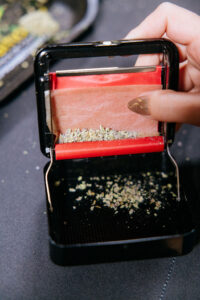
Josie and Esper tried adding flower, removing flower, inserting the paper, licking the paper, closing the machine, reopening the machine and generally negotiating with it like a difficult toddler.
Too much flower prevented it from closing.
Too little flower created a loose joint.
Some flower escaped.
Some flower remained trapped inside.
At one point, the machine appeared to be functioning mostly as a tiny cannabis purse.
Eventually, they managed to produce something smokeable, but only after additional packing, reshaping and hand repairs.
The Verdict
Could someone become highly skilled with this machine?
Probably.
Should that person be trusted?
Unclear.
Josie and Esper both agreed that the larger machine was more complicated than simply learning how to roll a joint.
Rating: Two to four out of 10, depending on how generous everyone was feeling.
The flower still received a 10.
Method Four: Rolling a Joint by Hand
After being humbled by modern technology, Josie and Esper returned to the traditional method: rolling by hand.
They both use filters and prefer cone-shaped joints, but their techniques are slightly different.
This is an important lesson.
There is no single correct way to roll a joint. There is only the way that works for you and the way that causes half your flower to land on the floor.

Josie’s Method: Build the Cone First
Josie creates an empty cone before adding the flower.
How Josie Rolls a Joint
- Fold and roll the filter tip.
- Place it at one end of the paper.
- Wrap the paper around a packing stick.
- Form the paper into a cone.
- Seal the adhesive strip.
- Leave the packing stick inside while the paper dries.
- Add flower gradually.
- Pack each layer gently.
- Twist the top closed.
The packing stick keeps the cone open while it dries and prevents the paper from collapsing.
Once the cone is formed, Josie fills it the same way she would fill a pre-roll.
It is basically a homemade cone, only with more personality.

Esper’s Method: Add Flower Before Sealing
Esper adds flower before closing the paper.
How Esper Rolls a Joint
- Place the filter along the bottom edge of the paper.
- Add a small amount of ground flower.
- Spread it evenly with your fingers.
- Roll the paper back and forth to shape the flower.
- Keep the paper tight near the filter.
- Tuck the lower edge around the flower.
- Roll upward.
- Seal the adhesive strip.
- Add more flower if necessary.
- Pack and finish the top.
Esper prefers seeing how the flower sits inside the paper before sealing it.
She uses her fingers to shape the joint and keeps the area near the filter tighter than the wider end.
The result is a classic cone-style joint with good structure and airflow.
Which Rolling Method Is Best?
After testing all four methods, the rankings were fairly clear.
Best for Beginners: Pre-Rolled Cones
Pre-rolled cones require almost no rolling experience. Fill them, pack them and move on with your life.

Best Machine: The Traditional Roller
The smaller rolling machine had a learning curve, but it produced a decent straight joint.
The larger machine produced mostly confusion.
Best Overall: Hand Rolling
Hand rolling requires practice, but it gives you the most control over the joint’s size, shape, density and airflow.
It also provides the deeply satisfying experience of looking at a finished joint and saying, “I made that,” even when it is slightly crooked.
Tips for Rolling a Better Joint
Whatever method you choose, these tips can help:
- Grind the flower evenly.
- Do not grind it into dust.
- Use a filter for structure and airflow.
- Add flower gradually.
- Avoid overpacking.
- Keep the filter end slightly tighter.
- Let wet adhesive dry before aggressively handling the paper.
- Light the entire end evenly.
- Do not blame your rolling skills immediately if the wind causes an uneven burn.
- Accept that practice is part of the process.
Everyone rolls terrible joints at first.
Some people simply continue rolling terrible joints with great confidence.

Final Thoughts
Rolling a joint is part skill, part ritual and part refusing to give up after the paper folds itself into something medically concerning.
Josie and Esper found that the easiest methods were also the most dependable. Pre-rolled cones were fast and reliable. Hand rolling gave them the best control. The traditional roller worked well enough.
The box-style machine will be hearing from their attorneys.
Watch the full P37 video to see Josie and Esper test each method, compare their results and demonstrate how they prefer to roll their own joints.
Quality flower helps too, obviously.
For adults 21 and older. Consume responsibly and follow all applicable laws. Do not drive or operate machinery while impaired. Keep cannabis away from children and pets.